

Quick answer
The Brisbane whale watching season spans June through November, with peak sightings occurring from July to October. Humpback whales migrate north along the Queensland coast from June to August, then return south with newborn calves from September to November. Tours operate daily throughout this six-month window, departing from Redcliffe at 10:00 during the migration period.
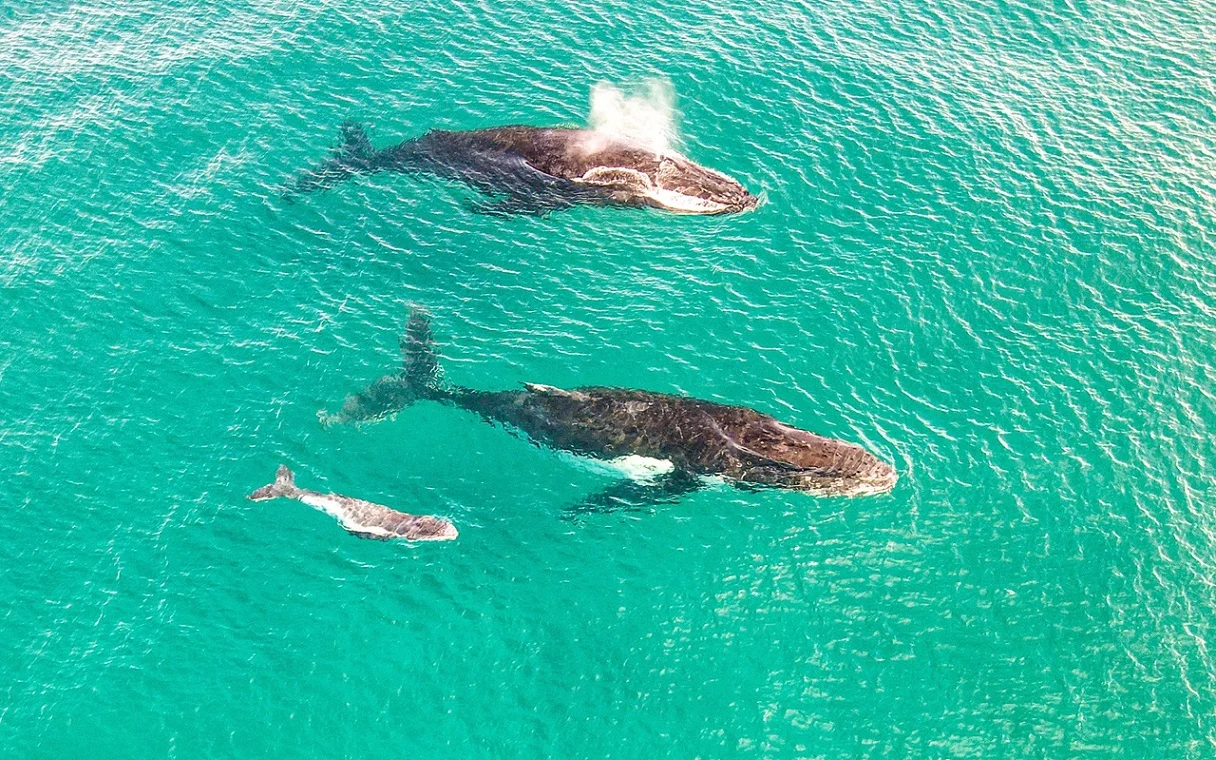
More than 30,000 humpback whales travel through Moreton Bay each year, making it one of the most reliable coastal viewing corridors in Australia. The migration follows a predictable pattern shaped by breeding cycles and water temperature, with the season's character shifting month by month. Northbound whales move quickly between June and August, traveling at speeds up to 8 kilometres per hour as mature adults push toward the warmer waters of the Great Barrier Reef and Coral Sea. These whales are focused and direct, though juveniles and sub-adults occasionally linger in the bay to practice breaching and tail-slapping behaviours. July marks the statistical peak of northbound traffic, with pod sightings recorded on nearly every tour departure from Redcliffe Jetty. The southbound leg begins in September and extends through November, bringing a different dynamic to Moreton Bay whale encounters. Mothers and newborn calves move slowly through the protected waters, resting frequently and staying closer to shore than the northbound cohort. Calves born in tropical waters weeks earlier are still learning to breach and coordinate their breathing, resulting in extended surface time that favours observation. October consistently delivers the highest concentration of mother-calf pairs, while November sees the final stragglers and occasional competitive pods of males. Water temperature and krill availability influence the exact timing each year, with variations of one to two weeks considered normal. The East Australian Current strengthens in winter, pushing nutrient-rich water into the bay and occasionally drawing whales closer to the coast. Operators monitor sighting reports across the migration route, adjusting departure schedules when early or late pulses occur. Redcliffe's position on the western edge of Moreton Bay places it directly in the migration path, with most sightings occurring within 30 minutes of leaving the jetty. Whale behaviour shifts as the season progresses, offering different experiences depending on your travel window. Early-season tours favour active surface behaviour from energetic northbound whales, while late-season trips prioritise close encounters with slow-moving mothers teaching their calves to navigate the coast. Both windows deliver reliable sightings, but the question of timing depends on whether you're seeking athletic displays or intimate family observations.
“More than 30,000 humpback whales travel through Moreton Bay each year, making it one of the most reliable coastal viewing corridors in Australia.”
Understanding the Brisbane Whale Watching Season
The Brisbane whale watching season in Moreton Bay typically spans from June to November, with the peak migration period occurring between July and September. During these months, humpback whales are most active as they travel through the sheltered waters of the bay.
June
Low crowdsCool, 15°C to 22°C
The season begins as early migrants move north toward warmer breeding grounds. Observation is consistent as activity steadily increases.
July to August
Moderate crowdsCool to mild, 16°C to 23°C
This period marks the peak of the northern and southern migration phases. Whale activity is at its highest frequency during these months.
September to October
High crowdsMild to warm, 18°C to 25°C
Whales frequently travel with calves, leading to increased surface activity. This is the busiest time for observers in Moreton Bay.
November
Low crowdsWarm, 20°C to 27°C
The migration season concludes as the final pods head toward Antarctic waters. Sightings become less frequent compared to the peak months.
Verdict: For the most frequent sightings, aim for a mid-week visit during the peak months of July or August.
Daily Operational Hours for Brisbane Whale Watching Season Tours
Brisbane Whale Watching tours operate daily from Redcliffe Jetty throughout the season. Visitors are advised to follow the recommended arrival window to facilitate the boarding process.
| Monday | 09:00–15:00 | |
|---|---|---|
| Tuesday | 09:00–15:00 | |
| Wednesday | 09:00–15:00 | |
| Thursday | 09:00–15:00 | |
| Friday | 09:00–15:00 | |
| Saturday | 09:00–15:00 | |
| Sunday | 09:00–15:00 |
Brisbane Whale Watching Season Admission and Fees
Admission costs for whale watching in Moreton Bay depend on whether you choose land-based viewing or a vessel-based tour. While land-based observation is available at no cost, tours require a per-person ticket fee.
A typical adult pays a per-person ticket fee for vessel-based tours, which varies depending on the specific tour operator and selected package.
Arriving for the Brisbane Whale Watching Season at Redcliffe Jetty
Whale watching excursions depart from the Redcliffe Jetty, located at Redcliffe, QLD 4020, Australia. The jetty is accessible via private vehicle or public transport from Brisbane.
M1 and M3 via Houghton Highway
Route 690 from Kippa-Ring Station
Redcliffe Peninsula Line to Kippa-Ring Station
Brisbane Whale Watching Season Preparation Checklist
Prepare for your whale watching trip with these essential steps and items.
-
Book your tour in advance — Peak season tours fill quickly, especially weekends and school holidays.
-
Arrive at Redcliffe Jetty by 09:30 — Boarding begins at 09:00 for a 10:00 departure.
-
Bring sunscreen and a hat — Moreton Bay offers limited shade on deck during the cruise.
-
Pack layers and a waterproof jacket — Ocean conditions can be cooler and spray is common.
-
Carry binoculars for distant sightings — Whales surface unpredictably across the bay.
-
Take motion sickness medication if needed — Swells in open water affect sensitive passengers.
Check availability
Common Questions About Brisbane Whale Watching Season
Everything you need to know about brisbane whale watching season