8 hr
Moreton Bay Whale Watching Adventure with Lunch
- Expert local guide
- Small group
- Skip-the-line access
- Free cancellation
Brisbane Whale Watching Tours — Moreton Bay Departures
Humpback migration corridor, wild dolphin encounters, daily departures from Redcliffe Jetty
Compare fares, pick the fit — all bookings are mobile-voucher and eligible for free cancellation where shown.
8 hr
24 hr
24 hr
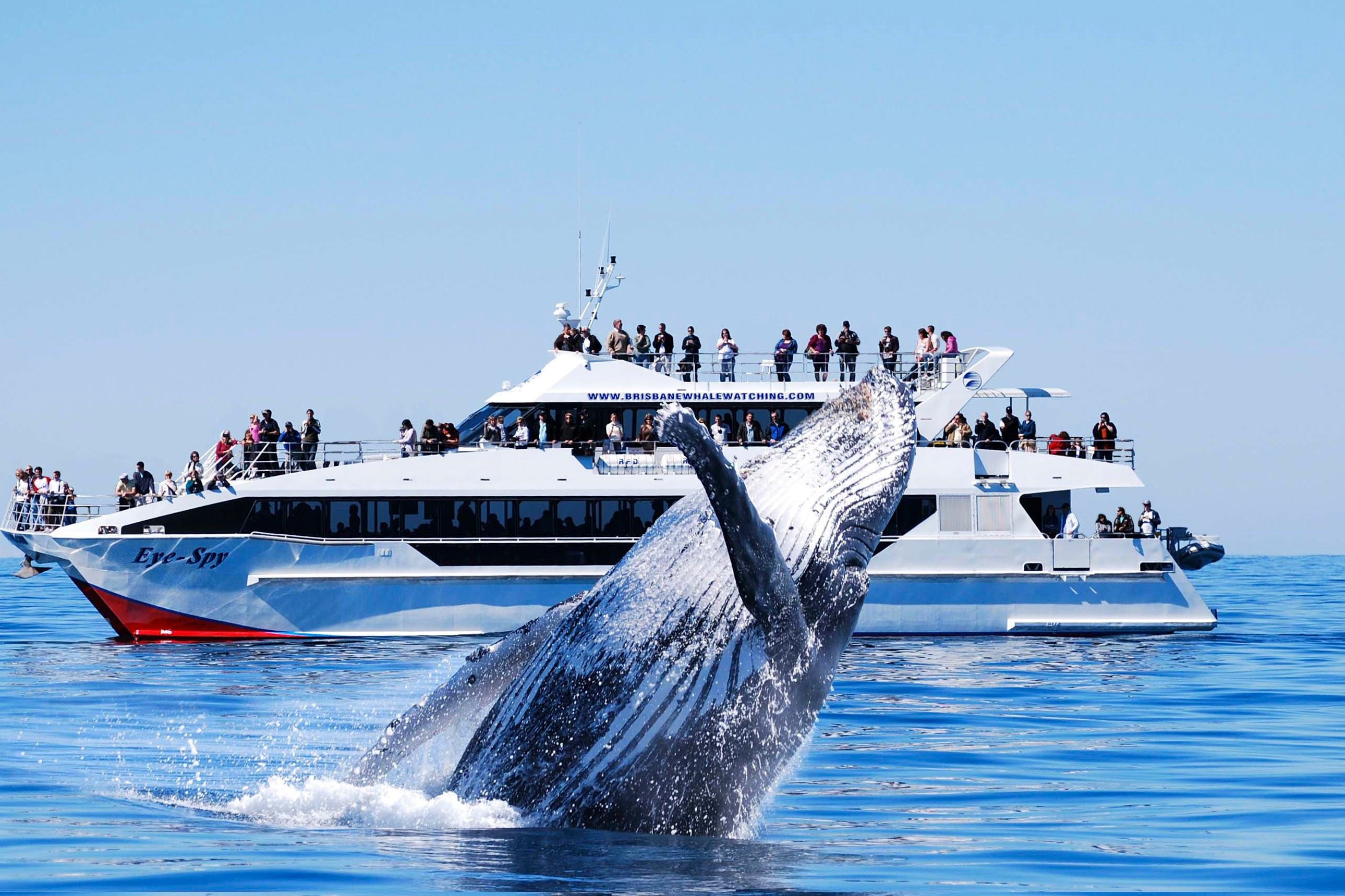
Selecting the right brisbane whale watching tours option ensures you have the ideal vantage point for spotting humpback whales in Moreton Bay. Whether you prioritize premium seating or standard comfort, these brisbane whale watching tours tickets provide access to the luxurious Eye Spy catamaran.
| Day Cruise Standard Seating | Premium Cruise Window Table |
Top pick VIP Cruise Mid-deck Lounge |
|
|---|---|---|---|
| Seating Location | General cabin seating | Main deck window seat | Exclusive mid-deck lounge |
| Service Level | Standard amenities | Priority lunch service | Hostess and priority boarding |
| Complimentary Drinks | — | — | One complimentary beverage |
| Sightings Guarantee | 100% whale guarantee | 100% whale guarantee | 100% whale guarantee |
| Best for | Budget-conscious visitors | Frequent whale watchers | First-timers seeking comfort |
| See tickets & prices |
Verdict: For the best experience on your brisbane whale watching tours tour, the VIP option offers the most elevated views and dedicated service for a seamless day on the water.
Worth it for wildlife enthusiasts and nature lovers
Moreton Bay whale watching tours deliver strong value for visitors seeking humpback whale encounters during the annual migration season. The bay's protected waters host one of the highest cetacean sighting rates on Australia's east coast, with operators reporting 95%+ success between June and November. Most excursions include marine biologist commentary, lunch provisions, and 3-4 hours on the water—enough time for multiple whale sightings without feeling rushed. Tours departing from Redcliffe Jetty eliminate the need for island transfers, keeping costs focused on the whale watching experience rather than transport logistics. The ecological significance of Moreton Bay as a critical humpback nursing ground adds educational depth beyond simple sightseeing. For travelers prioritizing marine wildlife over beach resort experiences, dedicated whale watching adventures offer better value than combination packages that split time between activities. The cost-to-experience ratio favors these tours particularly during peak migration months when pods linger in the bay for extended feeding and socializing behaviors.
Bottom line: Brisbane whale watching tours tickets represent solid value for anyone serious about observing humpback whales in their natural migratory habitat.
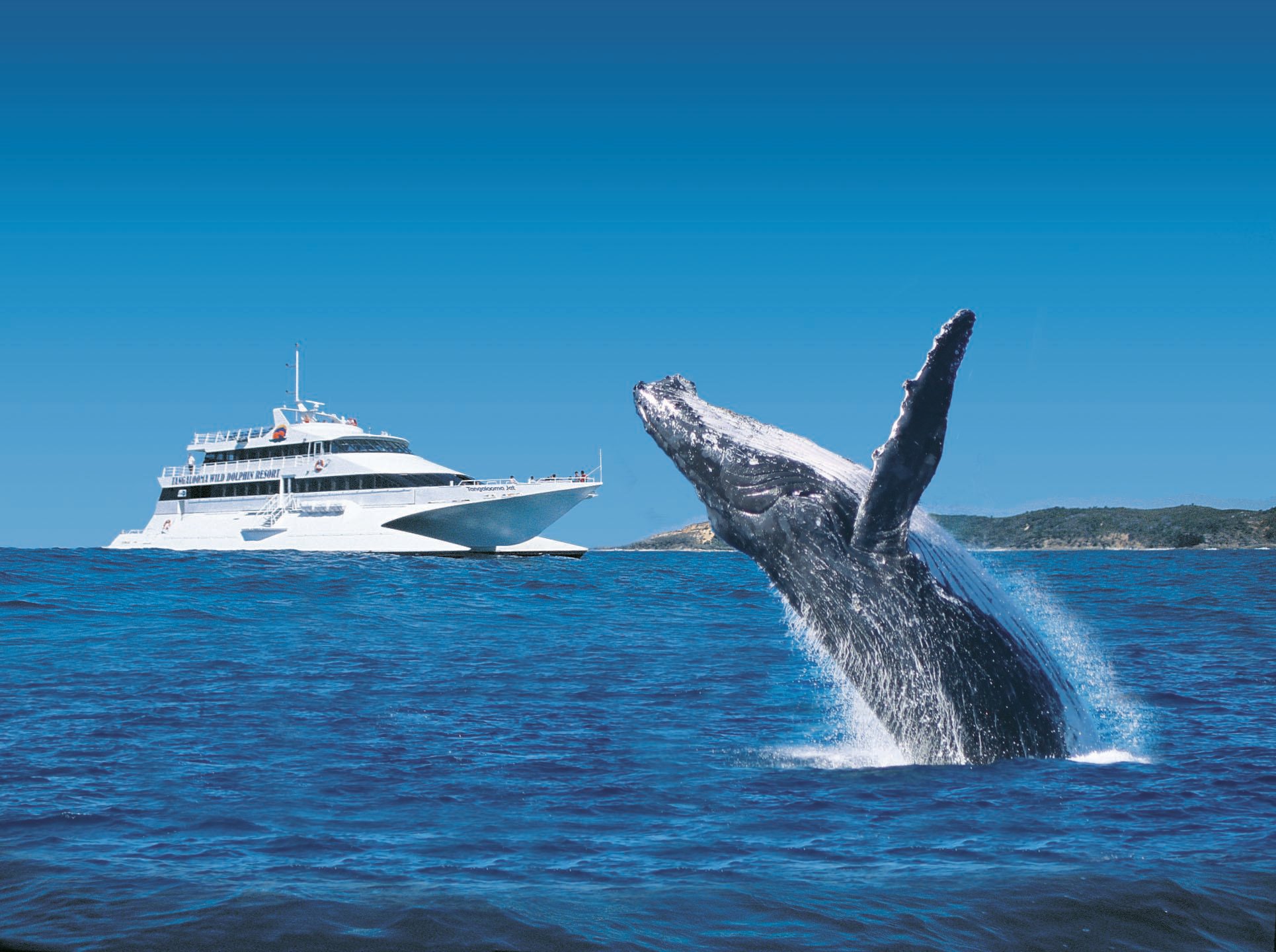
These two brisbane whale watching tours represent the primary ways to experience the migration; choose based on whether you prefer a direct departure or a broader island resort adventure.
|
Top pick Brisbane Whale Watching |
Tangalooma Cruises | |
|---|---|---|
| Departure Point | Redcliffe Jetty | Holt Street Wharf |
| Primary Vessel | Eye Spy Catamaran | High-speed Catamaran |
| Whale Sightings | 100% Guarantee | 100% Guarantee |
| Duration | 5 hours (approx.) | 3 hours (cruise only) |
| Inclusions | Lunch included | Lunch included |
| Target Audience | Serious whale observers | Resort day-trippers |
| Booking Type | Direct brisbane whale watching tours tickets | Resort tour package |
| Vessel Atmosphere | Specialized tour focus | Resort-integrated experience |
| See tickets & prices |
Verdict: For travelers seeking a dedicated excursion, this brisbane whale watching tours tour offers a seamless experience from Redcliffe, while those combining wildlife viewing with island activities often prefer the Tangalooma brisbane whale watching tours tours.
Hand-picked experiences loved by thousands of travelers
1 day
Free Cancellation
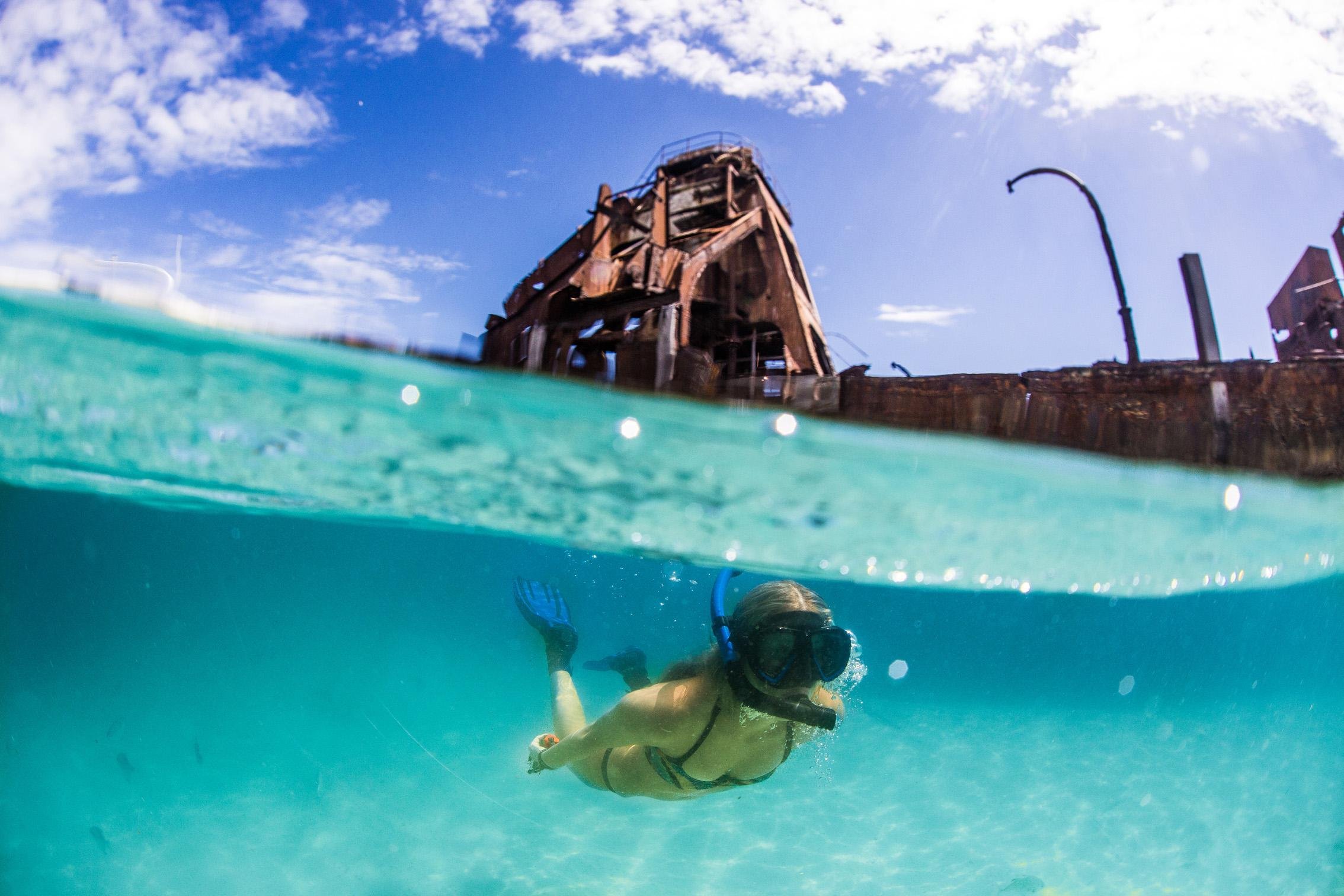
Discover pristine beaches, shipwreck snorkeling, and thrilling sand dunes on this guided island escape
10 hours
Free Cancellation
Discover pristine lakes, coastal trails, and native wildlife on a full-day guided escape to Stradbroke Island
1 day
Free Cancellation
Eco-certified day trip from Brisbane to explore pristine beaches, spot koalas and dolphins, and walk coastal trails
10 hours
Free Cancellation
Discover Minjerribah's pristine beaches, abundant wildlife, and Indigenous heritage on this guided escape from Brisbane
8 hours
Free Cancellation
Full-day ocean adventure exploring shipwreck sites, pristine beaches, and spotting dolphins in their natural habitat
1 full day
Free Cancellation
Full-day adventure from Brisbane featuring 4WD desert safari, sand tobogganing, and wild dolphin feeding
1 day
Free Cancellation
Full-day escape from Brisbane featuring guided snorkeling among 15 sunken ships and exclusive island resort access
2.5 hours
Free Cancellation
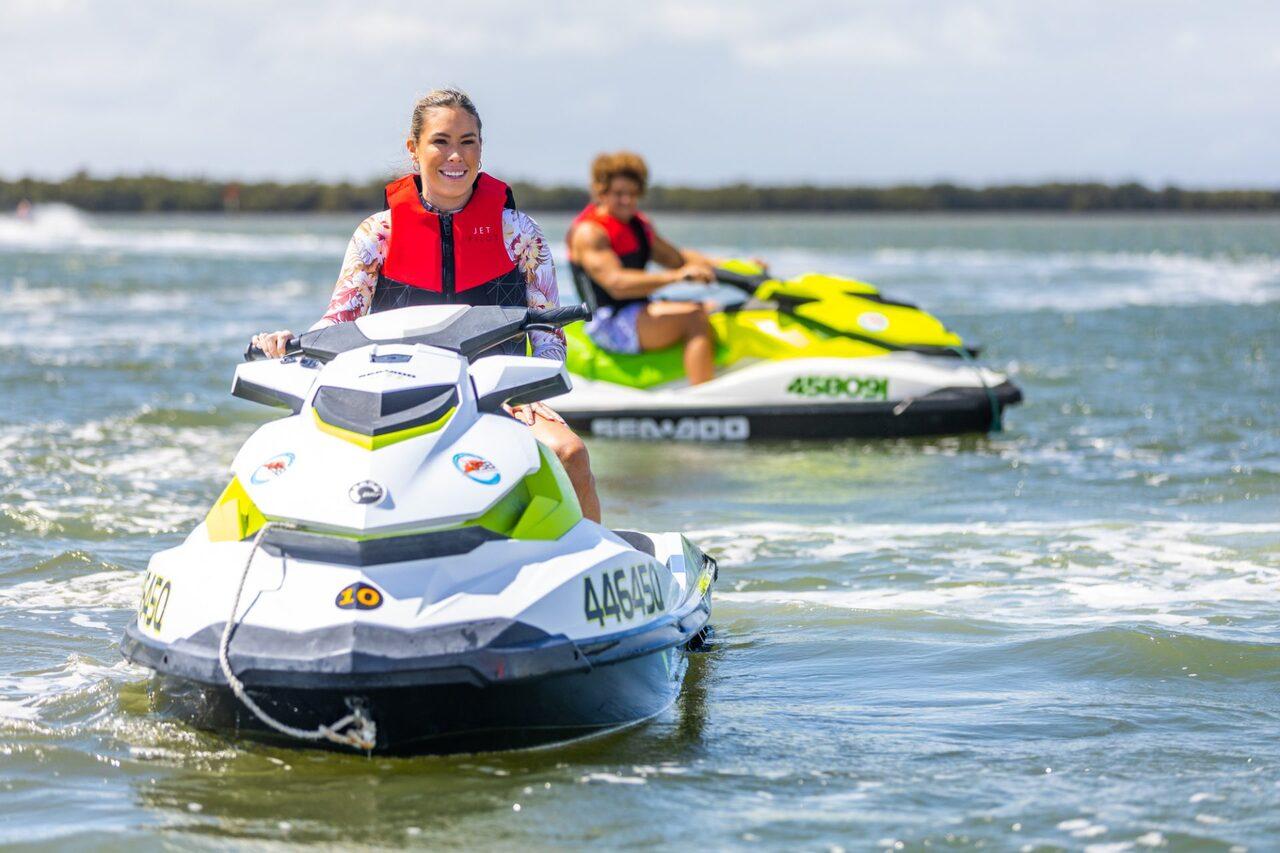
Ride your own jet ski through Brisbane's waterways to Moreton Bay, spotting dolphins and turtles along the way
Confirm tickets at Redcliffe Jetty
Access vessel and safety briefing
Travel to Moreton Bay whale grounds
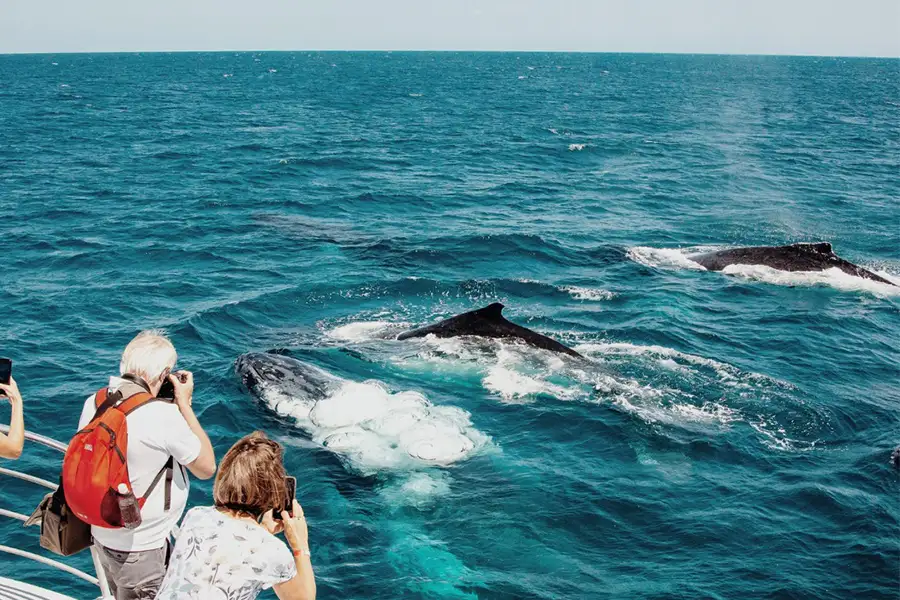
Humpback whale spotting and photography
Cruise back to the mainland
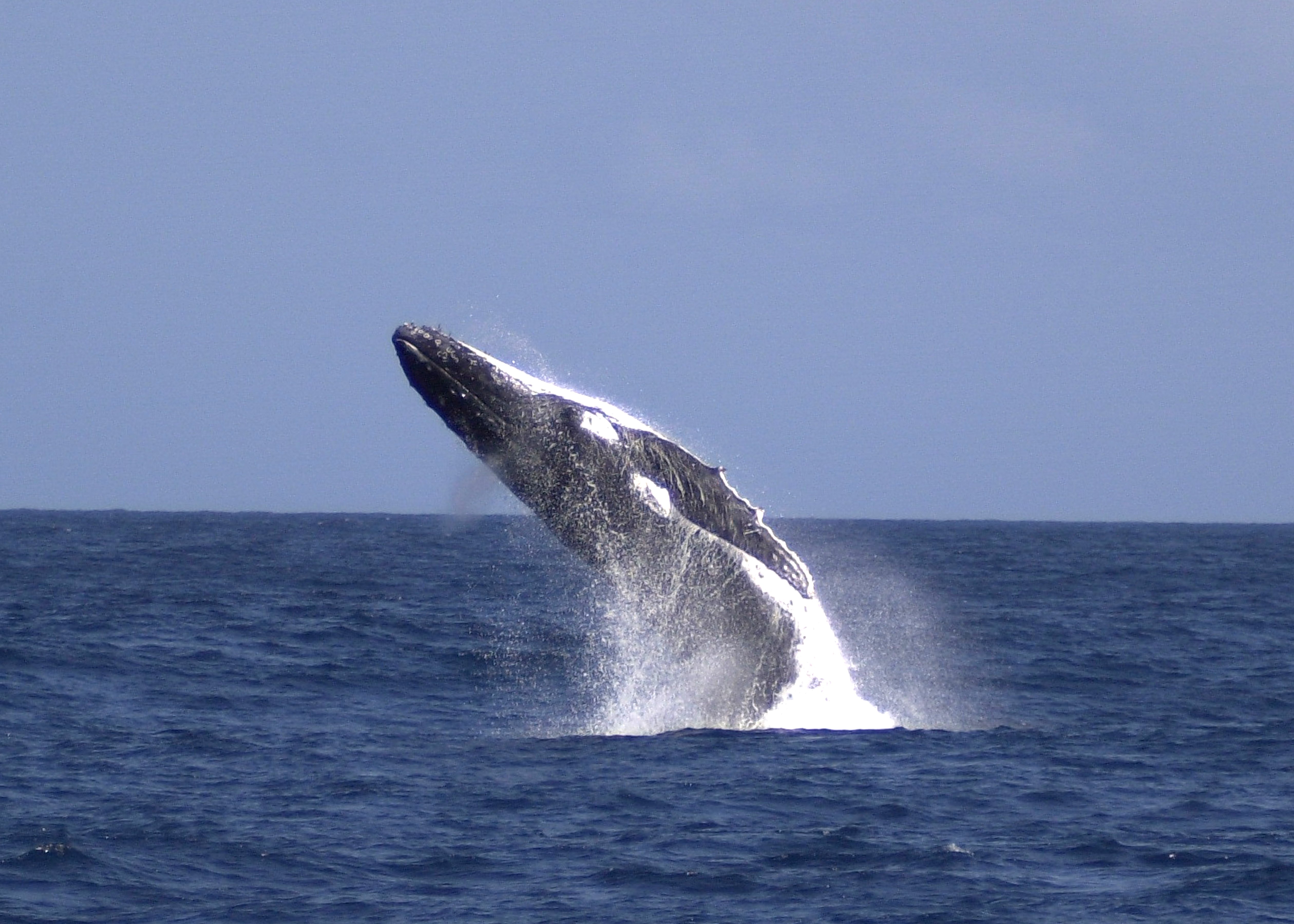
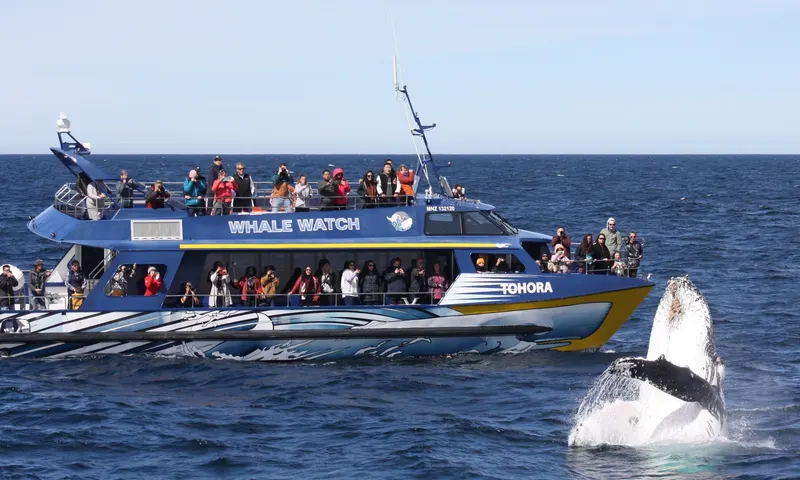
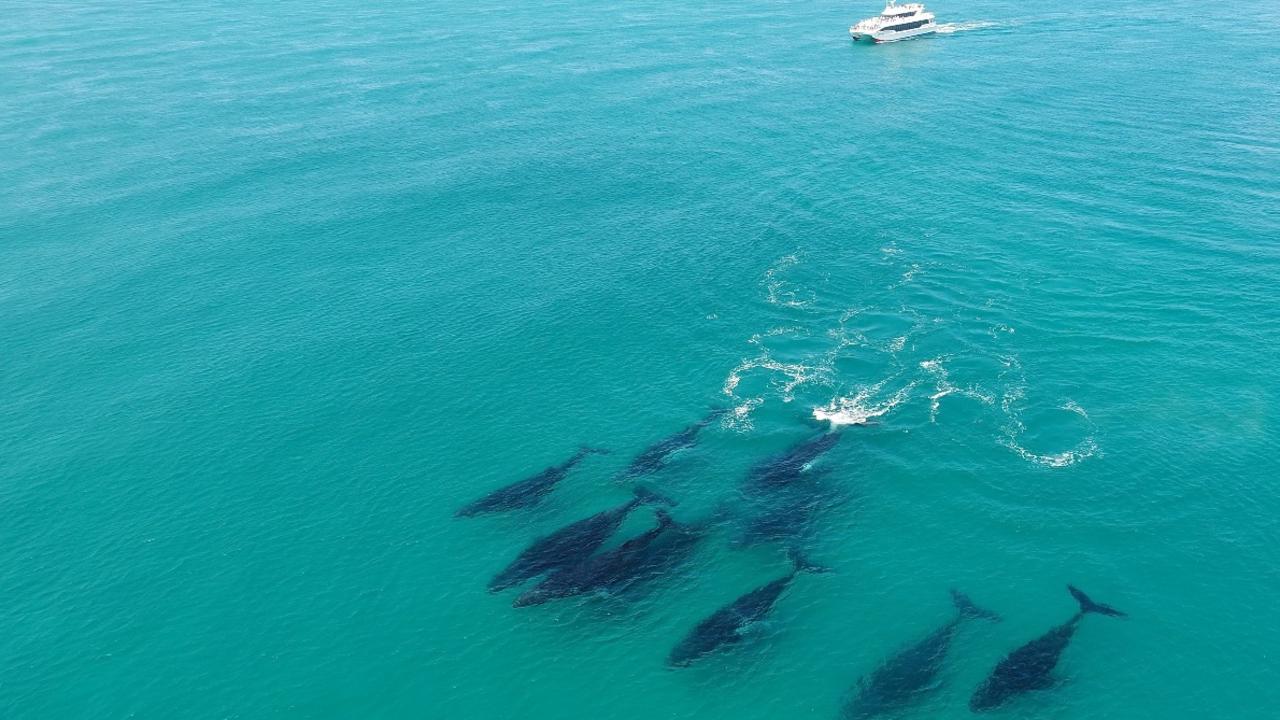
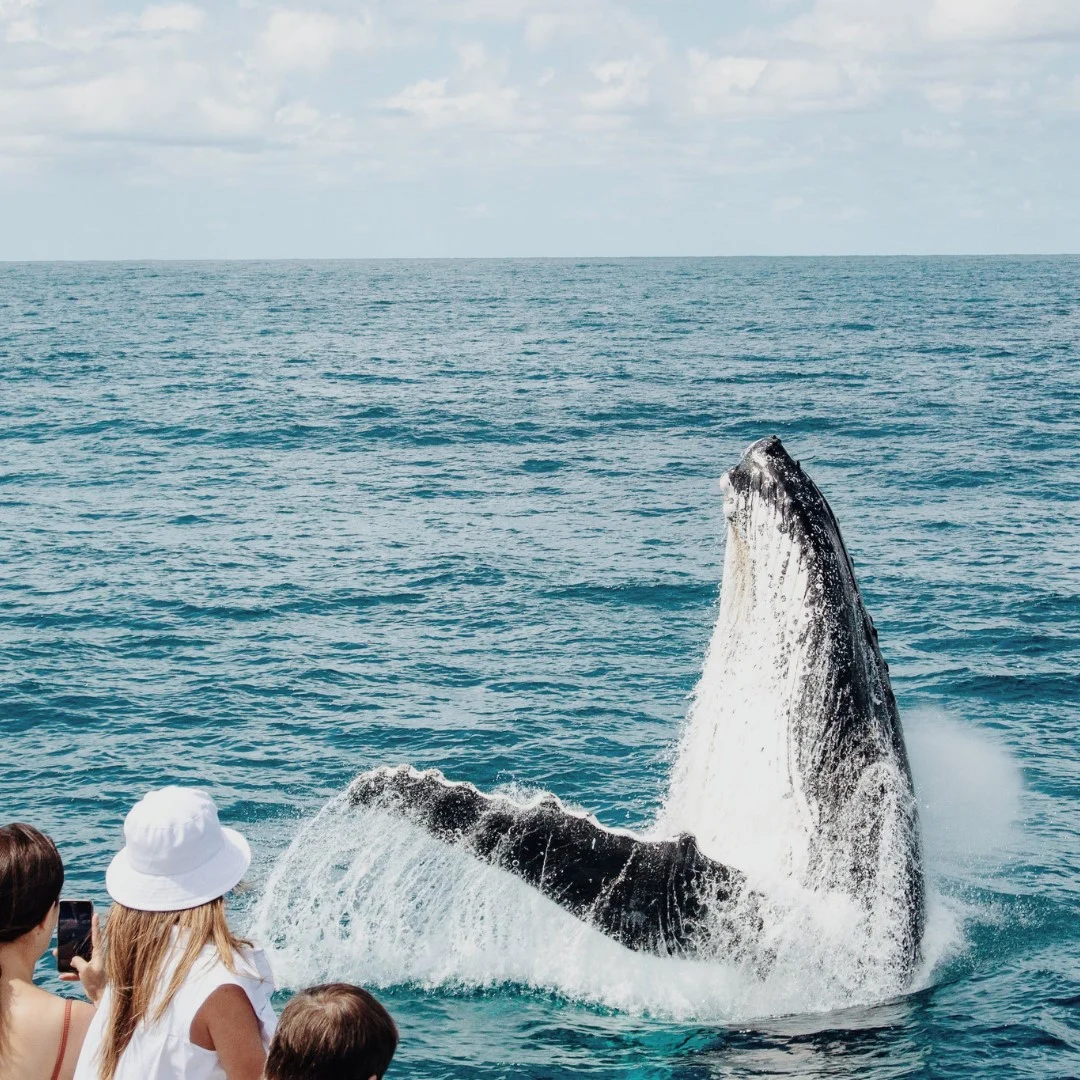
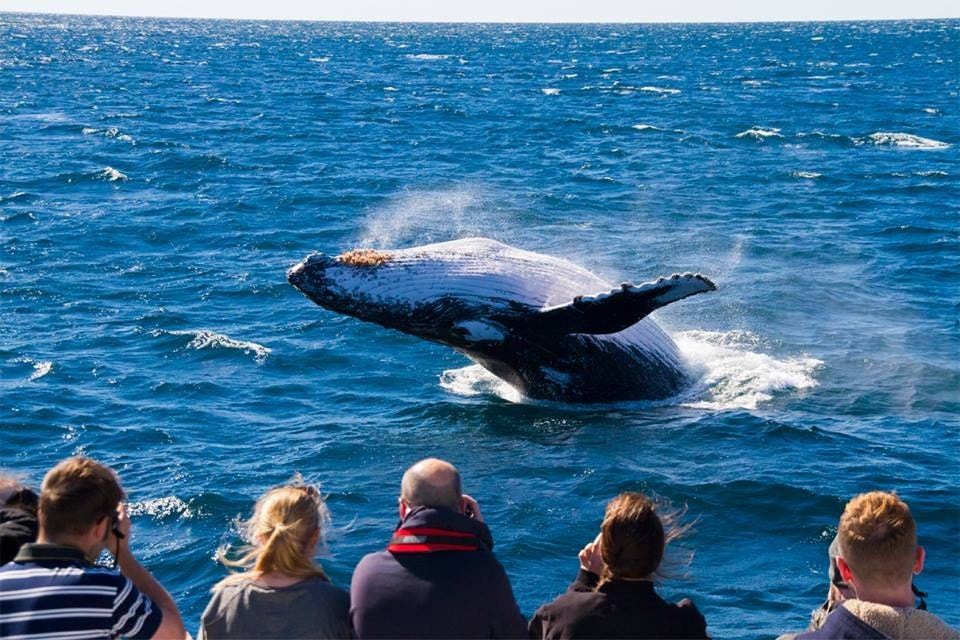
Witness majestic humpbacks breaching and tail-slapping in the wild waters of Moreton Bay. These mammals can weigh up to 40 tons and are frequently spotted here.
This protected area is a haven for diverse marine life, including dolphins, turtles, and seasonal migratory whales. The park spans thousands of square kilometers of vital coastal habitat.
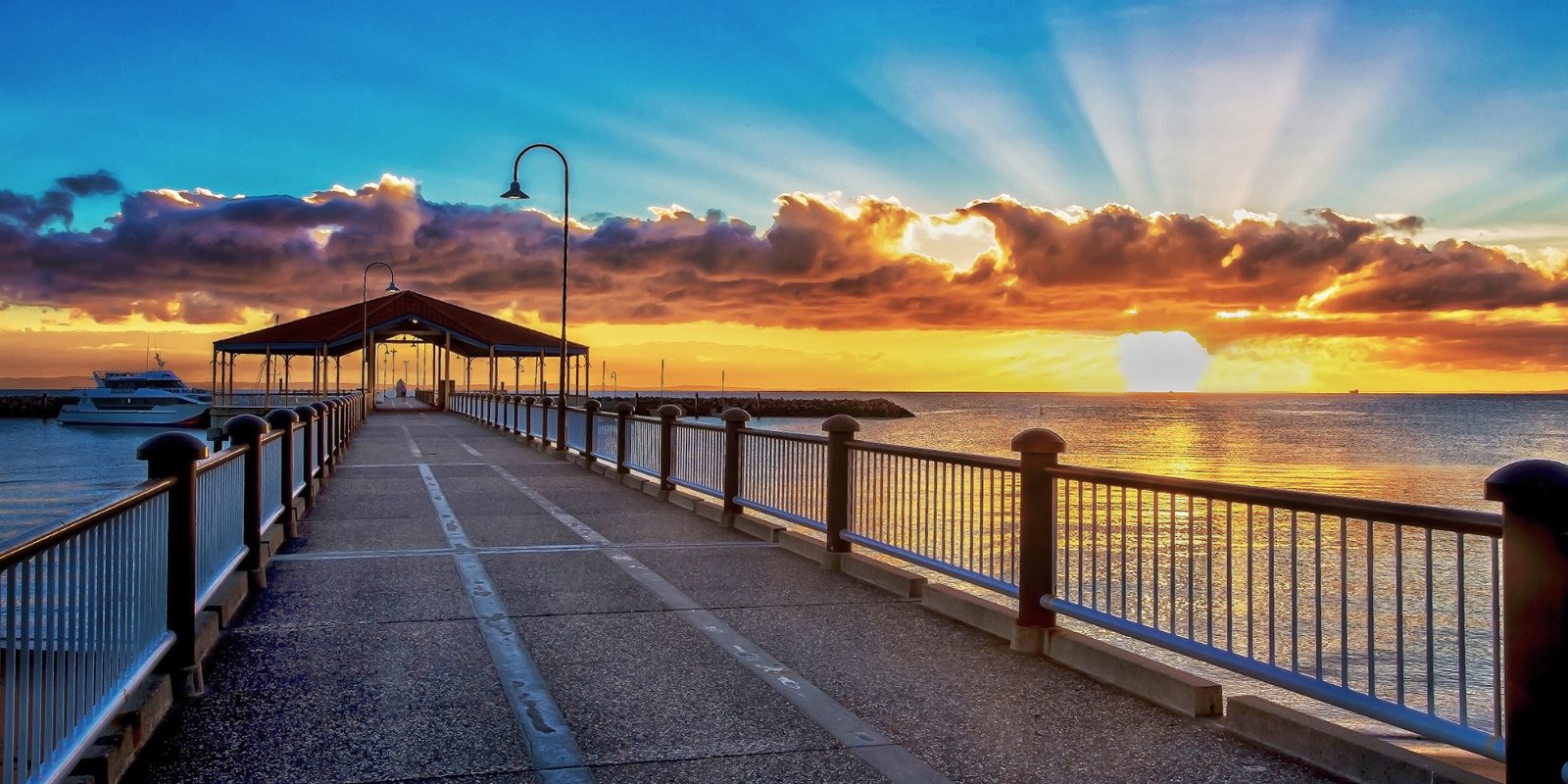
The historic landing point serves as the primary gateway for maritime adventures in the region. It is a landmark location for capturing scenic ocean panoramas.
Late in the season, mothers and calves are commonly observed teaching essential survival skills in the calm bay waters. These interactions represent a core experience of local wildlife tours.
On-board experts provide real-time education regarding the biological behaviors and migration patterns of the species encountered. This information adds depth to every observation session.
You board at Redcliffe Jetty by 09:30, the catamaran's twin hulls already lined with padded observation rails and shaded bench seating. The vessel clears the breakwater at 10:00, its hydrophones broadcasting the low-frequency pulses of distant pod communication through deck-mounted speakers.
Within 35 minutes you cross into the designated whale watching zone east of Moreton Island, where the first blow—a six-metre vertical spout—appears 200 metres off the starboard bow.
The captain cuts the engines to idle, allowing a cow and calf pair to approach within 50 metres. The calf breaches twice, its four-metre body clearing the waterline before crashing sideways in a cascade of white spray. You move to the bow as a competitive male group surfaces to port, three adults jostling for position, their pectoral fins slapping the surface in synchronised displays. The hydrophone feed shifts to rhythmic clicks and ascending melodic phrases, the males' competitive song audible without amplification.
Lunch is served on the return transit—sandwiches, fruit, and chilled water—as the vessel parallels Moreton Island's western shore. Dolphins appear in the wake, riding the pressure wave for several minutes before peeling off toward Tangalooma's beach. You dock back at Redcliffe by 14:30, the descent ramp crowded with passengers reviewing close-up breach photographs on phone screens.
All the details about your upcoming adventure in one place
Each winter, over 30,000 humpback whales traverse the 1,500-kilometre corridor between Antarctic feeding grounds and the calving waters of the Great Barrier Reef, and Moreton Bay marks the narrowest passage of their annual migration.
The sheltered waters between Moreton Island and the Redcliffe Peninsula compress the migratory route to less than 20 nautical miles, creating the densest whale traffic in Queensland between June and November. Operators departing from Redcliffe Jetty reach the pod congregation zones within 40 minutes, a proximity unmatched by any other departure point along the southeast coast.
The humpback population recovered from fewer than 500 individuals in 1962 to an estimated 40,000 by 2026, a demographic rebound that transformed Moreton Bay from a quiet coastal inlet into one of the Southern Hemisphere's most reliable cetacean observation sites. Northbound pods between June and August carry newborn calves practising breaching manoeuvres in the bay's shallow eastern channels. Southbound migration from September through November brings juveniles and competitive male groups, often accompanied by bottlenose dolphins riding the bow waves. The Moreton Bay Marine Park's 3,400 square kilometres of protected habitat ensure minimal vessel traffic outside designated whale watching zones, preserving the corridor's acoustic environment.
Redcliffe Jetty serves as the primary embarkation point for Brisbane whale watching tours, its deep-water berths accommodating catamarans ranging from 15-metre rigid inflatables to 24-metre passenger vessels equipped with hydrophones and underwater viewing platforms. The jetty's location at the bay's northern apex reduces transit time to the migration corridor by 30 minutes compared to Brisbane River departures, maximising observation windows during the typical five-hour excursion. Tangalooma Resort on Moreton Island's western shore offers a secondary departure option, pairing whale encounters with the site's evening wild dolphin feeding programme, a ritual maintained since 1992 when a pod of seven dolphins began approaching the beach at dusk.
Moreton Island itself forms a 37-kilometre sand barrier separating the bay from the Coral Sea, its submerged eastern shelf creating upwelling zones that concentrate krill and small fish—prey species that attract not only migrating whales but resident manta rays and seasonal hammerhead sharks. The island's northern tip, Cape Moreton, has recorded whale sightings on 94 per cent of survey days during peak season since monitoring began in 2018, a consistency that allows operators to guarantee sightings or offer complimentary return cruises.

Moreton Bay compresses the migratory route to less than 20 nautical miles, creating the densest whale traffic in Queensland between June and November.
Wear comfortable clothing and layers, as wind speeds increase on the water. Non-slip footwear is highly recommended for safety on boat decks during brisbane whale watching tours.
Keep bags compact to ensure they fit in designated storage areas during your brisbane whale watching tours. Large suitcases may not be permitted on smaller vessels.
Photography is encouraged during brisbane whale watching tours, but ensure your gear is secured against sea spray. Use a neck strap to protect cameras while observing humpback whales.
Children are welcome on brisbane whale watching tours, provided they are supervised at all times by an adult. Life jackets are provided and must be worn by minors if instructed by the crew.
Some vessels used for brisbane whale watching tours have limited wheelchair access due to the design of the marine decks. Please contact the operator in advance to discuss specific boarding requirements.
Check your specific booking for meal inclusions, as some brisbane whale watching tours provide refreshments on board. Bringing a reusable water bottle is encouraged to stay hydrated.
Opening hours
09:00–14:30
Address
Redcliffe Jetty, Redcliffe Parade, Redcliffe, QLD 4020, Australia
Accessibility
Vessel facilities vary; contact for assistance
Best arrival
09:00–09:30
Storage
Limited space available on board
Location
Moreton Bay Marine Park
Car · 60 min · -
Drive to Redcliffe Parade; public parking is available near the jetty.
Public transport · 90 min · -
Take a train to Kippa-Ring station followed by a short bus or taxi to Redcliffe Jetty.
Cancellations must be made within the operator's specified timeframe to qualify for a refund. The 0 AUD entrance fee applies to the jetty access, while cruise costs are governed by individual operator policies.
Recommended time
Half a day
Planning your Brisbane whale watching tours itinerary requires arriving at Redcliffe Jetty well ahead of departure to secure your spot. We recommend the best arrival window of 09:00–09:30, as boarding typically commences at 09:00 for a 10:00 departure. This early start ensures you are settled on the vessel before the marine wildlife expedition begins in Moreton Bay. Following these brisbane whale watching tours tours guidelines helps maintain a smooth flow as passengers gather for the journey. When browsing brisbane whale watching tours tickets, consider that the total time on the water varies, making this a substantial half-day commitment. Securing your brisbane whale watching tours tour early allows for a relaxed transition from the Redcliffe Parade precinct to the open ocean.
Crowd levels through the day
Weather · crowds · average price — dots go green to amber to red as each metric rises.
Peak winter migration season with frequent whale sightings.
Active late-season period featuring playful calves and pods.
End of season when whales travel back to Antarctica.
Mild temperatures ideal for comfortable sea travel during brisbane whale watching tours.
Reserve your brisbane whale watching tours tickets in advance to ensure availability during peak migration.
Monitor marine conditions the morning of your trip to confirm if your tour is operating.
Take seasickness medication one hour before boarding to stay comfortable on the water.
Bring your own pair of binoculars to enhance views of the whales from the deck.
The wind chill is significant at sea, even on sunny days in Queensland.
Redcliffe Parade, Redcliffe, QLD 4020
Main departure point for cruises
Get directionsMoreton Bay's reputation as a humpback whale corridor predates European settlement, with Indigenous Quandamooka people observing the annual migrations for millennia. Commercial whale watching emerged in Brisbane during the late 1980s, when Australian regulations shifted from whaling to conservation after the International Whaling Commission moratorium of 1982. Early brisbane whale watching tours departed from Tangalooma in 1987, capitalizing on the predictable June-to-November migration window when humpbacks travel from Antarctic feeding grounds to tropical breeding waters near the Great Barrier Reef. Redcliffe operators entered the market in the mid-1990s, offering shorter transit times to North Stradbroke Island's eastern approaches where whales congregate. The industry faced a critical juncture in 2005 when Queensland Parks and Wildlife Service introduced vessel approach limits—100 meters for powered craft, mandatory slow speeds within 300 meters—after tourism growth raised behavioral disturbance concerns. Operators adapted by deploying spotter planes and hydrophones to locate pods without close pursuit. A 2009 population study confirmed East Australian humpback numbers had rebounded to approximately 14,000, validating the conservation model and securing permits for expanded tour schedules. Moreton Bay Marine Park zoning, finalized in 2019, designated specific transit corridors that balanced whale protection with access for whale watching tour operators. By 2022, Brisbane whale watching had matured into a regulated seasonal enterprise, with peak July-September departures accounting for the majority of annual bookings. Redcliffe Jetty became the primary mainland embarkation point, chosen for its proximity to feeding zones where whales breach and tail-slap. The sector weathered COVID-19 closures in 2020-2021, resuming operations under capacity limits that remain standard practice. Today's brisbane whale watching tours tickets include mandatory briefings on approach protocols, reflecting three decades of evolving marine stewardship.
International Whaling Commission moratorium halts commercial whaling, paving the way for Australian whale tourism.
First commercial whale watching tours launch from Tangalooma, targeting humpback migration routes through Moreton Bay.
Redcliffe operators begin seasonal excursions, reducing travel time to prime whale viewing areas off North Stradbroke Island.
Queensland introduces 100-meter vessel approach limits to minimize disturbance to migrating humpback pods.
Population study confirms East Australian humpback recovery to 14,000 individuals, supporting permit expansion for tour operators.
Moreton Bay Marine Park zoning designates whale watching transit corridors balancing conservation and tourism access.
COVID-19 pandemic suspends operations; tours resume with reduced capacity protocols that become industry standard.
Seasonal whale watching from Redcliffe Jetty reaches operational maturity with hydrophone technology and mandatory environmental briefings.
Position yourself at the start of the jetty to capture the vessel against the Moreton Bay horizon. This vantage point provides a clear shot of the boat as it prepares to depart for brisbane whale watching tours.
Located near the marina, this elevated deck offers a wide angle of the coastline and the Humpback whale migration path. It is ideal for long-lens shots when you want to frame the marine mammals in their natural habitat during brisbane whale watching tours tours.
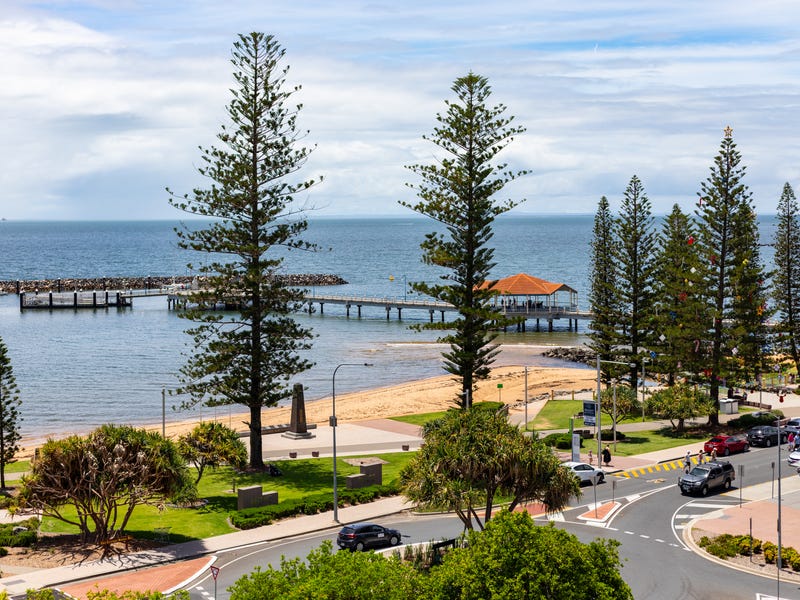
Walk along the main promenade to find gaps between the Norfolk Pines for framed harbor shots. This location allows photographers to capture the boat docked before passengers board for their brisbane whale watching tours tour.
Stand near the southern end of the jetty to capture the boat silhouetted against the morning sun. This spot is popular for documenting the departure of brisbane whale watching tours tickets holders as they head toward Moreton Island.
Exploring Moreton Bay on brisbane whale watching tours is an exciting experience for children who enjoy being out on the water. Preparation is key to ensuring a smooth Moreton Bay marine wildlife tour for the whole family.
Pack ginger tablets or acupressure bands before your brisbane whale watching tours tours, as the open ocean can get choppy. Keep children hydrated and seated in the center of the vessel to minimize the impact of boat movement.
Dress in layers, as wind chill on the water makes temperatures feel cooler than on the shore. Include hats, sunscreen, and polarized sunglasses to protect young eyes from glare when securing your brisbane whale watching tours tickets.
These cruises are best suited for children who can sit quietly for several hours. While there is no strict minimum age, consider if your child can manage the duration of a brisbane whale watching tours tour without constant activity.
The vessels are equipped with toilets, though space is limited for changing toddlers. Plan to bring a small, minimalist bag with essentials to keep your seating area clear of clutter.
Strollers must be left at the jetty as they are not practical on the boat decks. Opt for a baby carrier if you are bringing infants on your brisbane whale watching tours excursion.
Visitors planning for brisbane whale watching tours will find a vibrant selection of cafes along Redcliffe Parade. This coastal strip offers convenient dining options for a quick pre-boarding coffee or a relaxed meal after returning from your Moreton Bay marine excursion.
Offers expansive water views and a diverse menu ranging from burgers to fresh seafood. It serves as a popular post-cruise spot for those holding brisbane whale watching tours tickets.
Everything you need to know for your journey
The operator is open daily from 09:00–14:30.
It is recommended to purchase brisbane whale watching tours tickets online to guarantee your spot on the vessel.
Yes, there is a 0 AUD entrance fee for access to the public jetty area.
Plan to arrive at the meeting point between 09:00–09:30 to ensure boarding for the 10:00 departure.
Yes, families are welcome on brisbane whale watching tours, provided children are supervised by an adult.
Photography is permitted and encouraged during your time at sea.
If a tour is cancelled due to weather, the operator will contact you to arrange a refund or reschedule.
You can drive to Redcliffe Jetty or take a train to Kippa-Ring followed by local transit.
Check your booking terms, though bringing a water bottle is always advised for your convenience.
The operator monitors conditions and will provide updates if a sailing must be rescheduled or cancelled.
Local history displays and heritage artifacts of the region.
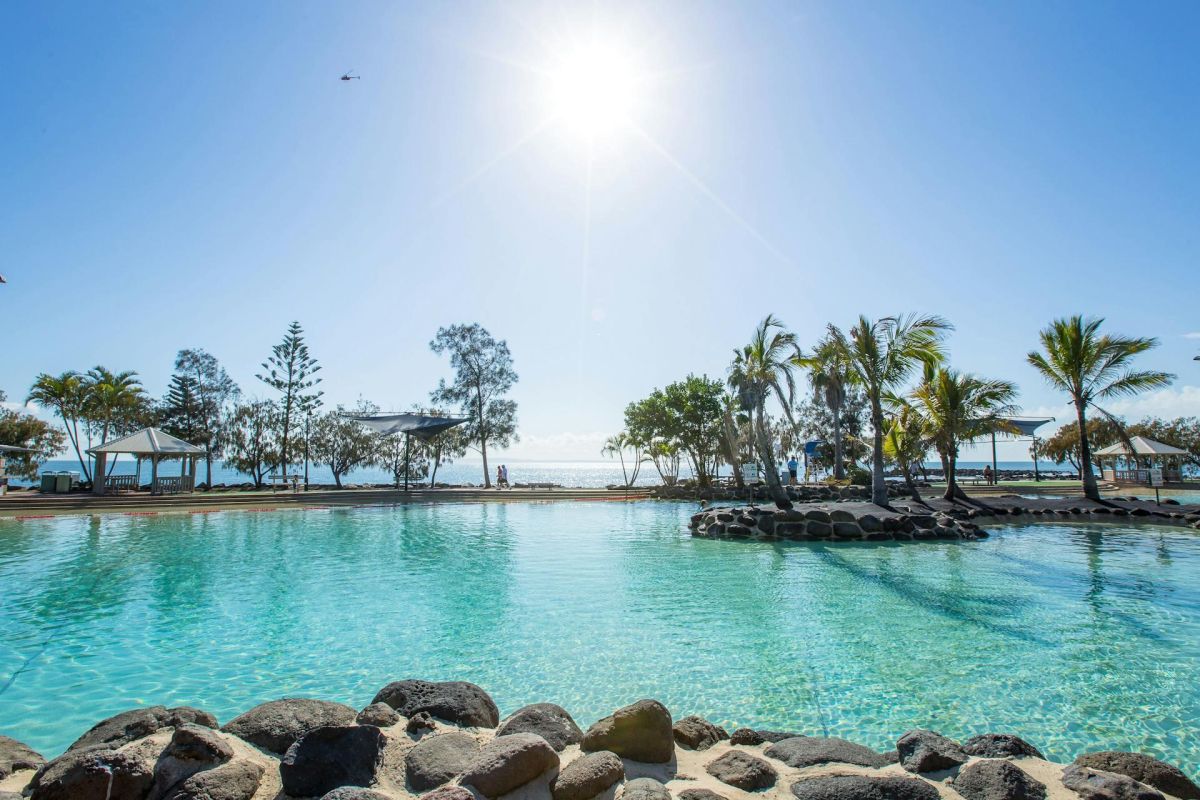
Large seaside swimming pool area with ocean views.
Outdoor memorial pathway celebrating the musical legacy of the Bee Gees.
Peaceful green space with native plant species and walking trails.
Waterfront hotel with views overlooking Moreton Bay.
Convenient lodging near the town center and jetty.
Various guesthouses and short-stay apartments available.
Join thousands of happy travelers who have discovered this incredible experience
Book Your Experience Now